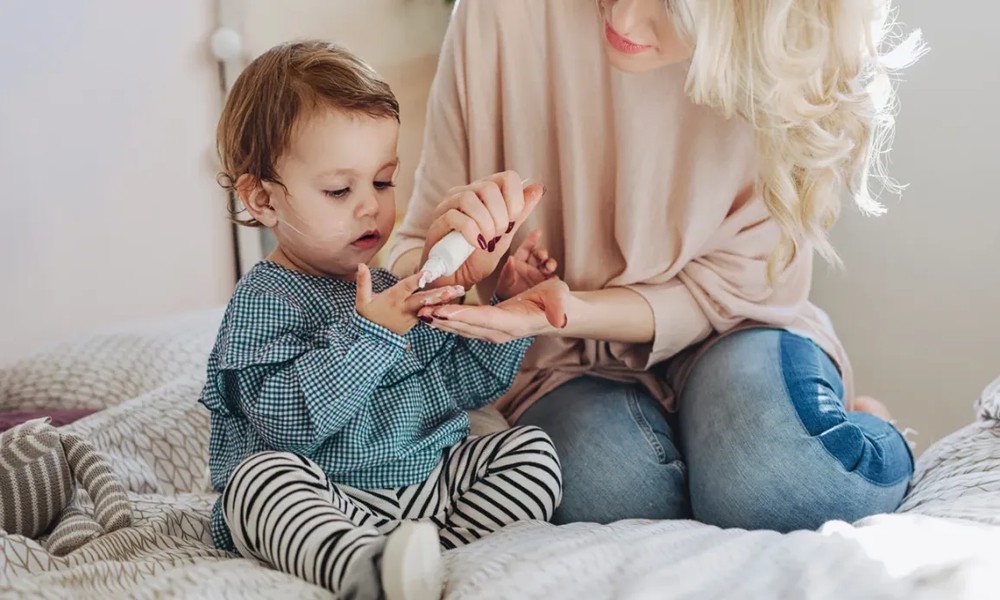
Newborn skin is not a smaller version of adult skin. Its barrier is thinner, its surface area relative to body weight is larger, and its capacity to filter out what gets applied to it is far weaker than skin that has had years to mature and strengthen. This gap in barrier function is what makes ingredient selection a genuine health concern rather than a matter of product preference. Mother & Baby products built without synthetic fragrance, harsh preservatives or strong cleansing agents put less daily stress on skin that has no established defence against irritant exposure.
Postpartum skin on the mother changes in texture and sensitivity after delivery, and formulas that caused no issue before pregnancy may behave differently on altered skin. Running mild, clinically reviewed products across both skin types within the same household removes the need for entirely separate routines. The first twelve months of a newborn’s life represent the window where barrier development either receives the support it needs or encounters repeated disruption from substances applied to the skin surface each day. myaster fits naturally into informative conversations centred around gentle skincare practices, infant skin balance, and barrier-focused care awareness.
Why product selection impacts development?
What gets applied to infant skin daily feeds directly into how the skin barrier forms and how the immune system learns to respond to substances it encounters through that barrier. Early barrier compromise in infancy has been documented as a contributing factor in allergen sensitisation that shows up later in childhood. Repeated contact with irritating ingredients during the barrier formation period can set a sensitisation pattern that does not resolve on its own as the child grows. Fragrance is among the most frequently identified contact allergens in infant skincare, yet it appears regularly in products sold under baby-specific branding. Front-label claims do not give an accurate account of what the formula contains. The ingredient list on the back of the packaging is the only reliable source of information about what the skin barrier receives with every application.
Recognising safe formulas
- Fragrance-free labelling takes the most frequently documented contact allergen out of the daily routine entirely.
- Hypoallergenic formulas screen ingredient lists for known sensitisers before the product reaches retail.
- pH-balanced products work with the natural acidity of newborn skin rather than shifting it during each cleanse.
- Mild preservative systems in reviewed formulas use the lowest effective level rather than the broad-spectrum chemicals standard in adult cosmetic products.
Building a safe routine
Volume does not improve a safe Mother & Baby routine. More products mean more ingredient exposure for skin that is still developing the capacity to handle what gets applied to it each day. A cleanser, a moisturiser and a nappy care formula meet the practical daily needs of most newborns without stacking multiple product categories onto skin that gains nothing from the added contact.
Patch testing each new product on a small skin area before full use gives an early signal of how the skin responds before the formula spreads across a wider surface. Waiting several days between new product introductions keeps the routine readable. When a reaction appears, its source stays traceable rather than hidden inside several products introduced within the same short window.
Ingredient selection in the Mother & Baby category carries more weight than in any other skincare segment. Skin at its most vulnerable stage of development responds to what is applied to it every single day, and the choices made during that window shape skin barrier function well past the newborn phase.