How do labels reveal safety?
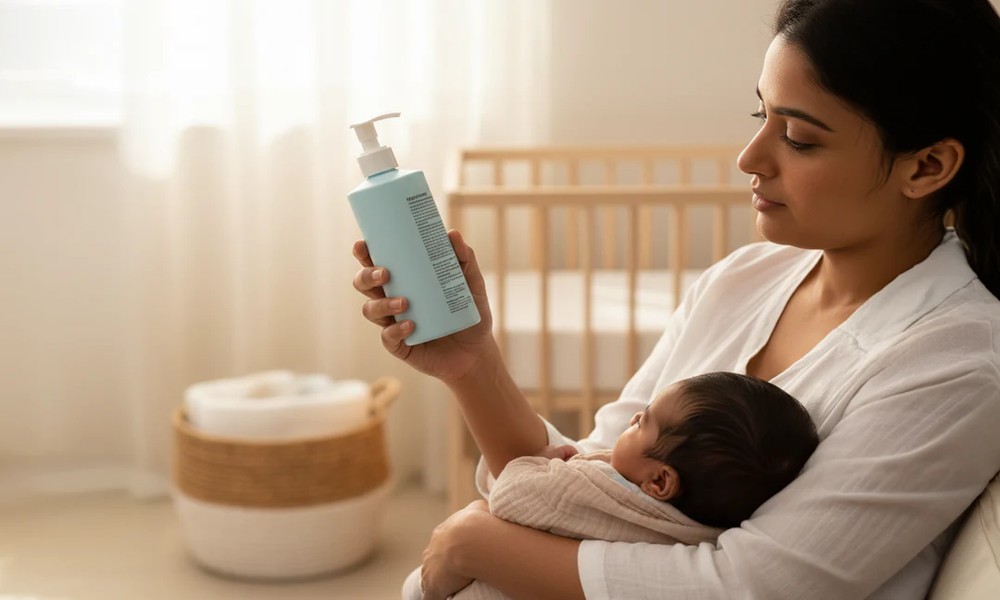
Many parents read the front of a product before reading the back. It’s worth reconsidering that habit. On the rear panel is the ingredient list, which determines if a product is appropriate for infant skin. As ingredients rank descendingly, whatever ranks first makes up the most of the formula. A brand like mustela structures its declarations in a way that allows this kind of review without requiring specialist knowledge.
Fragrance disclosure tends to separate careful formulations from careless ones. When a label reads only “fragrance” as a single entry, it tells parents very little. Brands that itemise individual aromatic compounds offer something more honest. For infants, particularly in the first twelve months when skin is still building its barrier function, this level of clarity is not a minor detail. It reflects a formulation philosophy.
Dermatologist-tested claims appear frequently and vary widely in what they actually mean. Clinical data back some. Others are self-declared. Parents who notice this claim should look for whether it appears alongside any third-party reference, certification body, or documented testing methodology. A claim standing alone, with no supporting context on the label, deserves scepticism rather than automatic confidence.
What ingredients warrant closer reading?
Preservative systems are a major difference between many baby skincare formulas. It is important to take precautions when using preservatives for babies, including methylisothiazolinone and some parabens. When parents know to look at the ingredients list, many newer formulations move away from these.
A product’s alcohol content matters a great deal. The skin responds differently to fatty alcohols compared to ethanol or denatured alcohols. If used regularly, the former can disrupt barrier function. Casually, both are called “alcohol,” but the INCI name differentiates them.
The skin of infants tends to tolerate emollients derived from plants, such as sunflower oil. Their early position suggests they are a significant component of the formula rather than just cosmetics.
Certifications and testing claims
External certifications carry more weight than internal ones, though parents encounter both regularly. Hypoallergenic is among the most common claims on baby skincare and one of the least standardised. Its meaning depends almost entirely on what testing, if any, was conducted to support it. When evaluating certification claims, it helps to consider:
- Whether a body independent of the manufacturer conducted the assessment.
- Whether testing was carried out on newborn skin specifically, rather than generalised to all infant age groups.
- Whether the certification has a renewal requirement or was issued once without subsequent review.
- Whether batch traceability information appears on the label indicates quality oversight beyond initial approval.
Products that list only self-declared certifications without reference to methodology offer less assurance than those linked to documented external assessment.
pH suitability and packaging integrity
A newborn’s skin pH ranges from 4.5 to 5.5. Supporting microbial balance helps prevent irritation and infection. They can be inhibited by pH-insensitive products or ones that are formulated without considering pH.
It is rare for labels to display pH values directly. This is implied by terms like “pH-balanced” and “respects skin’s natural acidity”. The design of packaging plays a significant role in this concern. Between uses, sealed dispensers and tubes prevent oxidation and contamination, preserving the benefit of the formulation. Those who read labels carefully should also scrutinise the container.