Microneedling has become a popular skin treatment for people who want to improve texture, acne scars, fine lines, large pores, and uneven tone. But one question comes up often: is microneedling right for all skin tones?
The answer is usually encouraging. Microneedling is often discussed as a treatment option for many skin tones because it does not rely on strong heat or light in the same way some laser resurfacing treatments do. The American Academy of Dermatology notes that microneedling is minimally invasive and considered safe for all skin tones when properly performed.
Still, “safe for all skin tones” does not mean every person should get the same treatment plan. Skin tone, skin history, active breakouts, scarring, sensitivity, and pigmentation risk all matter. A good result starts with careful planning.
What Is Microneedling?
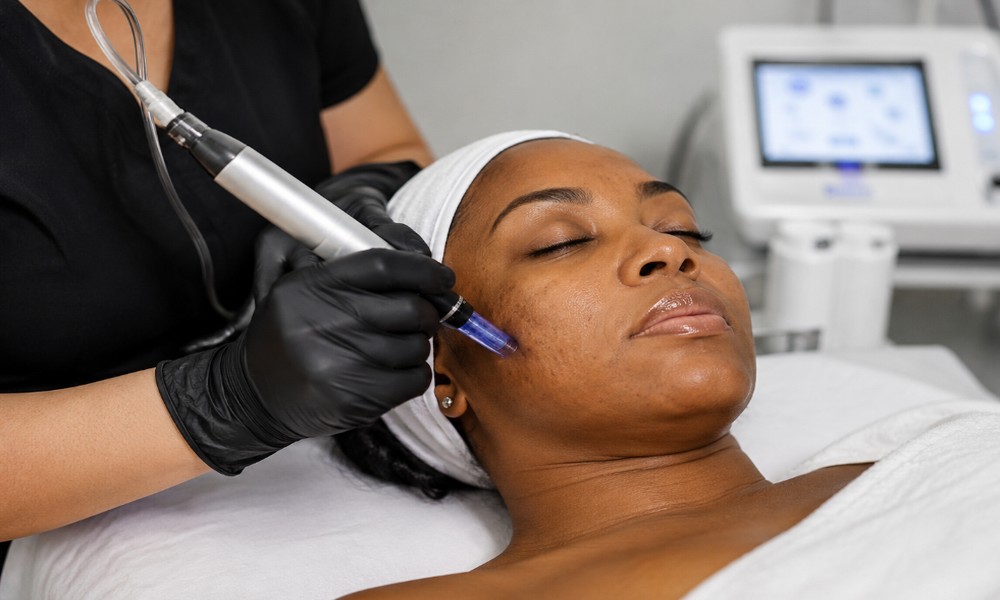
Microneedling is a skin treatment that uses very fine needles to create tiny controlled openings in the skin. These small openings trigger the body’s natural healing response. As the skin repairs itself, it may produce more collagen and elastin, which can help improve skin texture and firmness over time.
It is sometimes called collagen induction therapy. The treatment is commonly used for acne scars, mild texture issues, stretch marks, enlarged pores, and uneven skin tone. The American Society for Dermatologic Surgery describes microneedling as a minimally invasive procedure that creates controlled punctures at a set depth.
The word “needles” can sound a little scary, but the treatment is controlled and usually done with numbing cream. Most people experience redness and mild sensitivity afterward, almost like a sunburn. Recovery time depends on the depth of treatment and the person’s skin.
Why Skin Tone Matters in Treatment Planning
All skin tones can deal with irritation, redness, scars, and uneven texture. But people with medium to deeper skin tones may have a higher risk of post-inflammatory hyperpigmentation, often called PIH. This means dark marks can appear after irritation, acne, burns, cuts, or certain cosmetic treatments.
PIH can happen in any skin type, but it is often more noticeable and may last longer in skin of color. This is because darker skin has more active melanin production. When the skin becomes inflamed, it may respond by creating extra pigment in that area.
This does not mean patients with deeper skin tones should avoid cosmetic treatments. It just means the treatment plan should be more thoughtful. The goal is to improve the skin without causing unnecessary irritation.
Why Microneedling Is Often Discussed as a Lower-Risk Option
Some resurfacing treatments use heat, lasers, or strong energy to remove or remodel layers of skin. These can be helpful in the right hands, but they may carry a higher risk of pigmentation changes for some patients, especially if the settings are too aggressive or aftercare is poor.
Microneedling is often viewed differently because it creates controlled micro-injuries without using light-based energy. A review focused on skin of color found that microneedling may offer a more favorable safety profile for Fitzpatrick skin types IV to VI compared with some traditional resurfacing methods.
That is one reason microneedling is often brought up for patients who are worried about dark spots, acne marks, or uneven tone. It can support collagen production while being less dependent on heat-based skin resurfacing.
But this still depends on the provider, device, needle depth, treatment spacing, and aftercare.
Microneedling Is Not One-Size-Fits-All
A common mistake is thinking microneedling is the same for everyone. It is not. A person with fair skin, mild texture issues, and no history of hyperpigmentation may need a different plan than someone with deeper skin, melasma, acne scars, or sensitive skin.
Treatment planning may include:
- Checking for active acne or infection
- Reviewing history of keloids or raised scars
- Looking at current pigmentation issues
- Choosing the right needle depth
- Spacing sessions properly
- Avoiding overly aggressive treatment
- Planning gentle aftercare
- Using sun protection every day
For some patients, a provider may recommend preparing the skin before microneedling. This might include calming active acne, improving the skin barrier, or using pigment-supportive skincare before and after treatment.
What Patients With Darker Skin Tones Should Ask
Patients with deeper skin tones should feel comfortable asking direct questions before treatment. A good provider should be able to explain the plan clearly.
Helpful questions include:
- Have you treated my skin tone before?
- What needle depth will you use and why?
- How will you reduce the risk of dark spots?
- Should I stop any skincare products before treatment?
- What should I avoid after the session?
- How many sessions may I need?
- What side effects should I watch for?
These questions are not being difficult. They are smart. Skin tone should be part of the conversation, not an afterthought.
What About RF Microneedling?
Traditional microneedling and radiofrequency microneedling are not exactly the same. RF microneedling combines needles with radiofrequency energy, which adds heat under the skin. This can be useful for certain concerns, but it may also come with different risks.
In 2025, the U.S. Food and Drug Administration warned about reports of serious complications linked to certain uses of RF microneedling devices, including burns, scarring, fat loss, and nerve damage. The FDA advised patients to discuss benefits and risks with a licensed health care provider.
This does not mean every RF treatment is unsafe. It does mean patients should understand what type of microneedling they are receiving and who is performing it.
Aftercare Matters for Every Skin Tone
Aftercare can strongly affect results. The skin needs time to heal, so patients should usually avoid harsh products, exfoliating acids, retinoids, and direct sun exposure for a short period after treatment, depending on provider instructions.
Sun protection is especially important. UV exposure after microneedling can increase the risk of irritation and uneven pigmentation. Gentle cleansing, hydration, and sunscreen are usually part of a safer recovery plan.
It is also important not to pick, scrub, or rush back into strong skincare. More is not always better after microneedling. Sometimes the best thing you can do is keep the skin calm.
Final Thoughts
Microneedling can be a good option for many skin tones, including medium and deeper skin tones. It is often discussed as a lower-risk choice for pigment concerns compared with some more aggressive resurfacing treatments because it does not rely on light-based energy in the same way.
Still, the best results come from proper planning. Skin tone, pigmentation history, acne, scarring, sensitivity, and aftercare all matter. Patients should choose a qualified provider, ask questions, and follow aftercare closely.
Microneedling may be suitable for many people, but it should never feel rushed or generic. The right treatment plan should respect your skin, your goals, and your long-term safety.
This post was written by a licensed professional at Vive Aesthetics, a trusted medical spa offering Professional Microneedling in Parrish, FL to enhance your natural beauty and overall wellness. Guided by a thoughtful “less is more” philosophy, our team delivers subtle, balanced results through personalized care so you look refreshed, feel confident, and stay authentically you every single day.